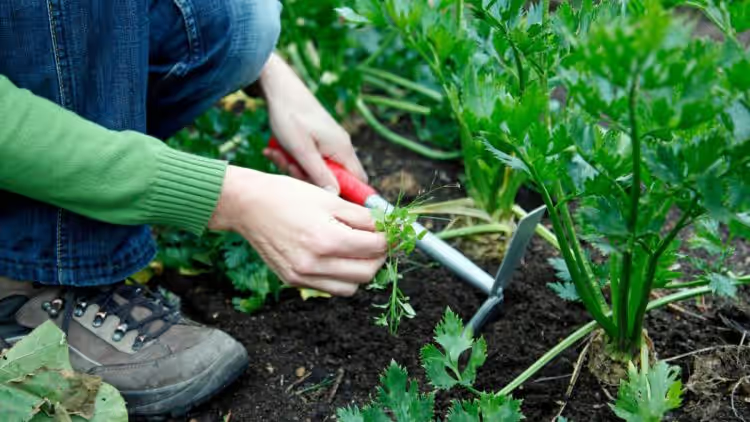
Weeds are persistent invaders that compete with your plants for nutrients, water, and sunlight. From pulling weeds by hand to natural suppression methods, there are plenty of ways to keep your garden weed-free. Here are 10 effective tips to help you control weeds without resorting to harmful chemicals.

1️⃣ Use Weeds as Indicator Plants
Did you know that some weeds can tell you about your soil quality? Certain species thrive in specific conditions:
✅ Nettles indicate nitrogen-rich soil.
✅ Buttercup & couch grass suggest compacted soil that needs aeration.
✅ Sheep sorrel grows in acidic soil, signaling a need for liming.
✅ Chickweed prefers humus-rich, fertile soil—perfect for vegetable gardening.
By understanding what your weeds reveal, you can improve soil health and prevent future weed growth.
2️⃣ The Power of a Joint Scraper
For paved areas, a joint scraper is an eco-friendly way to remove weeds.
✅ Choose a sharp blade and comfortable handle for easier weeding.
✅ Remove weeds before they flower to prevent seed spread.
✅ Avoid herbicides on driveways and pathways, as they can pollute waterways.
3️⃣ Manual Weeding: The Old-School, Effective Way
While weeding by hand isn’t the most exciting task, it’s incredibly effective—especially in vegetable gardens.
✅ Use a hoe to disrupt the capillary system of the soil, reducing water loss.
✅ Follow the old gardener’s rule: “One weeding saves three waterings.”
✅ In dry weather, leave uprooted weeds as mulch to retain moisture.
4️⃣ Remove Taprooted Weeds Completely
Some weeds, like dandelions, field thistles, and dock, have deep taproots that must be pulled out entirely.
✅ Use a weeder tool that allows easy removal while standing.
✅ If weeds regrow, repeat the process until the roots are exhausted.
✅ Act fast! Catch yarrow and other invasive weeds before they spread.
5️⃣ Mulching: A Natural Weed Barrier
Applying a layer of mulch can prevent weeds from sprouting while keeping the soil warm and moist.
✅ Use bark mulch or compost mulch around trees, roses, and shrubs.
✅ Apply a 5-10 cm thick layer to block sunlight from reaching weeds.
✅ Before mulching, fertilize with horn shavings to replenish nutrients.
6️⃣ Cover the Soil with Ground Cover Plants
The best way to suppress weeds naturally? Let other plants take over! 🌱
✅ Golden nettle, periwinkle, and ivy create dense foliage, leaving no space for weeds.
✅ In ornamental gardens, plant stork’s beak, lily of the valley, or golden strawberry.
✅ Use vegetation mats (pre-rooted ground covers) for instant weed suppression.
7️⃣ Remove Couch Grass & Bindweed Without a Trace
Weeds like couch grass, bindweed, and stonecrop spread underground. To get rid of them:
✅ Dig up all affected plants and remove every root fragment.
✅ Check perennial plant roots for weed rhizomes before replanting.
✅ Monitor the area regularly—even a small root can regrow into a new weed!
8️⃣ Block Weeds with Artificial Darkness
✅ Cover soil with black plastic, synthetic fabrics, or mulch paper to block sunlight.
✅ These materials also trap heat, promoting faster plant growth.
✅ Use biodegradable films instead of plastic for a more eco-friendly approach.
9️⃣ Use Heat Instead of Chemicals
🔥 Flame weeding or infrared heating is a great non-toxic alternative to herbicides.
✅ Works best on pathways and driveways.
✅ Avoid using it near dry grass or flammable areas.
✅ Only heat weeds until they turn dark green—no need to burn them completely.
💡 Tip: Two to four treatments per year are usually enough!
🔟 Should You Compost Weeds?
Composting is great, but beware of spreading weed seeds through your compost.
✅ Professional composting facilities get hot enough to kill weed seeds.
✅ Home compost piles often don’t reach high enough temperatures.
✅ To prevent re-growth, dry out weeds completely before adding them to compost.
🌱 Keep Your Garden Weed-Free the Natural Way!
By using these 10 effective weed control methods, you can reduce weeding efforts while keeping your garden healthy and thriving. Which method will you try first? 😊🌿


