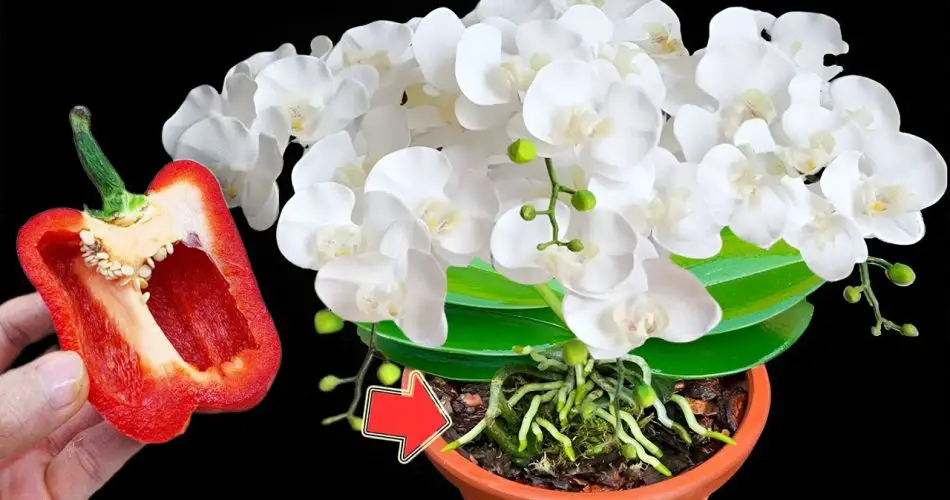
Orchids are known for their beauty and elegance, but they can sometimes be challenging to grow, especially when it comes to propagating them. A surprising yet effective solution is red pepper, which has been found to enhance root development in orchids. Here’s how red pepper, boasting properties 200 times stronger than garlic, can help your orchids take root quickly and robustly.
1. The Power of Red Pepper
Red pepper, particularly cayenne pepper, contains capsaicin, a compound with remarkable antimicrobial and antifungal properties. These properties can help in reducing the risk of infections and promoting healthy root growth in orchids.
2. Preparing the Red Pepper Solution
- Choose Your Pepper: Use cayenne pepper or red chili powder. These types are known for their potent properties.
- Mix the Solution:
- Ingredients: Combine 1 teaspoon of cayenne pepper with 1 liter of water.
- Preparation: Stir the mixture thoroughly to ensure the pepper is fully dissolved. Let it steep for about 15-20 minutes to maximize the extraction of capsaicin.
- Strain the Solution: After steeping, strain the solution through a fine mesh or cheesecloth to remove any solid particles.
3. Applying the Red Pepper Solution
- Soak the Orchid Roots: Before planting, soak the orchid roots in the red pepper solution for about 10-15 minutes. This helps to ensure the roots are exposed to the beneficial compounds.
- Rooting Medium: Prepare your orchid rooting medium, such as a mix of bark, perlite, and sphagnum moss. Ensure it is well-draining and sterile.
- Planting: After soaking, plant the orchid into the prepared medium. Ensure the roots are well-covered but not packed too tightly.
- Watering: Water the newly planted orchid lightly with a diluted solution of the red pepper tea to encourage further rooting.
4. Benefits of Using Red Pepper
- Enhanced Root Growth: The capsaicin in red pepper stimulates root development and helps the plant establish itself more quickly.
- Reduced Risk of Diseases: The antimicrobial properties help prevent fungal and bacterial infections that can hinder root development.
- Natural and Eco-Friendly: Using red pepper is a natural alternative to chemical rooting hormones and fertilizers.
5. Additional Care Tips for Orchids
- Light: Ensure orchids receive bright, indirect light to support healthy growth and blooming.
- Humidity: Maintain high humidity levels around your orchids, ideally between 50-70%, to mimic their natural habitat.
- Temperature: Keep the temperature within the range suitable for your orchid species, typically between 65-75°F (18-24°C).
- Watering: Water orchids with distilled or rainwater when the top inch of the soil feels dry. Avoid overwatering, as orchids prefer to dry out between waterings.
6. Monitoring and Adjusting
- Observe Root Development: Check the progress of the roots regularly. Healthy roots should be firm and white or light green in color.
- Adjust Conditions: Based on the orchid’s response, adjust light, humidity, and watering as needed to ensure optimal growth.

Using red pepper as a rooting aid leverages its potent properties to give your orchids a healthy start. By incorporating this natural method, you can enhance root growth and improve the overall health of your orchids, ensuring they thrive and flourish in your indoor garden.