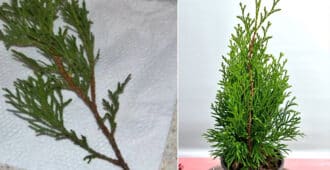
Unlocking the secrets of propagation can turn a single branch into a flourishing symbol of greenery, and thuja—a popular evergreen—stands as a prime candidate for such botanical magic. With a straightforward and rapid method, you can cultivate your own thuja from a humble branch, bringing nature’s elegance right into your home. Let’s explore this simple and quick process for growing thuja from a branch at home.
1. Selecting the Perfect Branch: Begin your thuja-growing journey by selecting a healthy branch from an existing thuja plant. Look for a branch that is approximately 6 to 8 inches long and displays vigorous growth with no signs of disease or damage. Choose a branch with several sets of leaves, as these will serve as the starting point for new growth.
2. Preparing the Cutting: With your chosen branch in hand, use a sharp, clean pair of pruning shears to make a clean cut just below a set of leaves. Remove any lower leaves along the stem, leaving only a few sets of leaves at the top. This will encourage the cutting to focus its energy on root development rather than sustaining unnecessary foliage.
3. Rooting Hormone Application: To expedite the rooting process, consider applying a rooting hormone to the cut end of the branch. Rooting hormones are available in powder, gel, or liquid form and contain growth-promoting substances that encourage the development of roots. Dip the cut end of the branch into the rooting hormone, ensuring that it is thoroughly coated.
4. Planting the Cutting: Once treated with rooting hormone, your thuja cutting is ready for planting. Fill a small pot with well-draining potting mix, such as a mixture of peat moss and perlite. Create a planting hole in the soil using a pencil or similar tool, then gently insert the cut end of the branch into the hole, ensuring that it is securely positioned.
5. Providing Optimal Conditions: After planting, place the pot in a location with bright, indirect sunlight. Keep the soil consistently moist but not waterlogged, as excessive moisture can lead to rot. Monitor the cutting regularly for signs of new growth, indicating successful root development. In approximately 4 to 6 weeks, your thuja cutting should begin to establish roots and show signs of growth.
With these simple steps, you can transform a humble thuja branch into a thriving new plant, adding a touch of natural beauty to your indoor or outdoor space. Whether you’re a seasoned gardener or a novice enthusiast, this quick and easy method of propagation offers a rewarding way to expand your greenery collection and connect with the wonder of plant growth firsthand.


