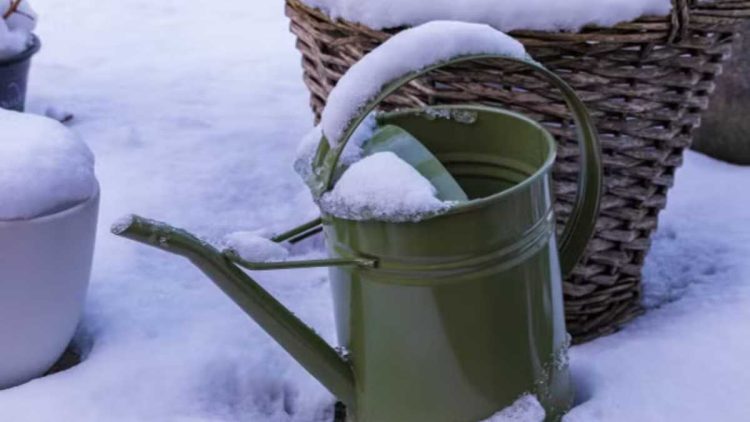
Even when snow covers your garden, it’s crucial not to forget about your plants. While it may seem like a time for the garden to rest, watering your plants during the winter months is essential to ensure their health and survival.

Why Watering is Still Important in Winter
Snow on the ground and freezing temperatures might make it feel unnecessary to care for your plants, but appearances can be deceiving. Plants can still dry out in winter if they’re not properly watered. The cold makes it harder for the soil to absorb moisture, and snow does not always reach the roots of plants.
It’s important to check the soil regularly – even under the snow – to see if it’s dry. Experts recommend doing this at least once a month. Keeping the soil hydrated ensures your plants will survive the winter and be ready to bloom come spring.
This advice applies not only to garden beds but also to potted plants on your terrace or balcony. Watering them periodically will protect them from drying out and promote healthier growth in the spring.
Preparing Your Garden for Winter
Proper winterization of your garden is key to helping your plants thrive during the cold months. Here’s how to make sure your garden is ready for the frost:
- Pruning Trees and Shrubs: In the fall, prune trees, shrubs, and perennials to encourage healthy growth in the spring. Make sure to complete the pruning before the frost sets in.
- Supporting Hibernating Animals: Hedgehogs, squirrels, and birds are vital to your garden ecosystem. Provide them with a safe, warm space to hibernate, such as leaf piles or natural shelters.
- Protecting Plants from Frost: Some plants can be left outdoors during winter with the right protection. Use bark mulch or fall leaves to insulate outdoor plants. For indoor plants, ensure they have cool temperatures and darkness to survive.
- Storing Garden Tools: Keep your garden tools indoors in a dry, frost-free place like a garden shed or garage to prevent rust and mold.
Despite the cold, don’t neglect your plants. By watering regularly, preparing your garden in the fall, and protecting your plants from the winter chill, you’ll ensure your garden is ready to thrive when spring arrives.