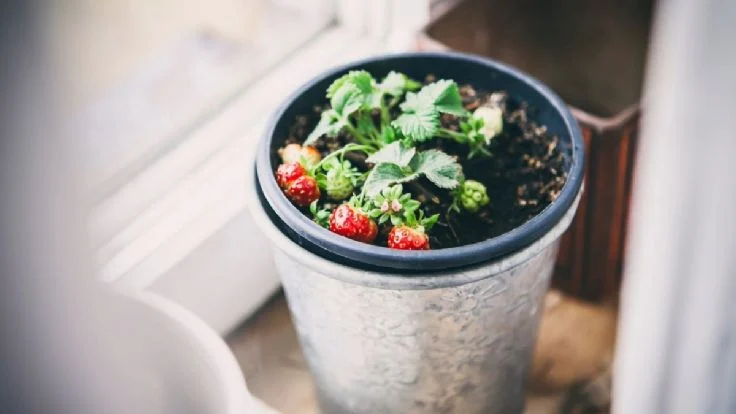
Strawberry plants are a delightful addition to any home garden, providing fresh, sweet berries that can be enjoyed straight from the plant. If you’ve recently purchased a strawberry plant, here’s a comprehensive guide to help you take care of it at home.
1. Choosing the Right Container
- Container Size: Choose a pot that is at least 12 inches in diameter and 8 inches deep. This provides enough space for the roots to grow and the plant to thrive.
- Drainage: Ensure the container has good drainage holes to prevent waterlogging, which can lead to root rot.
2. Soil and Planting
- Soil Type: Use a well-draining potting mix. Strawberries prefer slightly acidic soil with a pH between 5.5 and 6.8.
- Planting Depth: Plant the strawberry so that the crown (the part where the roots meet the stem) is at soil level. If buried too deep, the plant may rot; if too shallow, the roots may dry out.
3. Light Requirements
- Sunlight: Place the strawberry plant in a location where it receives at least 6-8 hours of direct sunlight daily. If growing indoors, a sunny windowsill or grow lights can provide the necessary light.
- Rotate the Plant: If the plant is indoors, rotate it every few days to ensure even light exposure and balanced growth.
4. Watering
- Consistent Moisture: Keep the soil consistently moist but not waterlogged. Water the plant whenever the top inch of soil feels dry.
- Watering Method: Water the base of the plant rather than the leaves to prevent fungal diseases.
5. Fertilizing
- Balanced Fertilizer: Use a balanced, water-soluble fertilizer every 3-4 weeks during the growing season. A fertilizer with an equal ratio of nitrogen, phosphorus, and potassium (such as 10-10-10) is ideal.
- Avoid Over-Fertilizing: Too much fertilizer can lead to excessive leaf growth at the expense of fruit production.
6. Pruning and Maintenance
- Remove Runners: Strawberry plants produce runners (long stems that create new plants). Remove these if you want to focus the plant’s energy on producing fruit rather than spreading.
- Trim Dead Leaves: Regularly trim any dead or yellowing leaves to keep the plant healthy and prevent disease.
7. Pollination
- Pollination: If your strawberry plant is indoors, you might need to help with pollination. Gently shake the plant or use a small brush to transfer pollen from one flower to another.
- Outdoor Pollination: If outdoors, bees and other pollinators usually handle this naturally.
8. Winter Care
- Indoor Plants: If you live in a region with harsh winters, you can bring potted strawberries indoors. Place them in a cool, bright location and reduce watering.
- Outdoor Plants: Mulch around the base of the plant to protect the roots from freezing temperatures.
9. Pest and Disease Control
- Common Pests: Watch out for pests like aphids, spider mites, and slugs. Use natural remedies or insecticidal soap to manage infestations.
- Fungal Diseases: Ensure good air circulation around the plant and avoid overhead watering to prevent fungal diseases like powdery mildew.
Summary
Caring for a strawberry plant at home requires attention to proper container selection, soil, sunlight, watering, and fertilization. By following these tips, you can enjoy healthy plants and a bountiful harvest of delicious strawberries. Regular maintenance, including pruning and pest control, will ensure your strawberry plant remains productive and vibrant. Enjoy the fruits of your labor with fresh, home-grown strawberries!
Show Comments