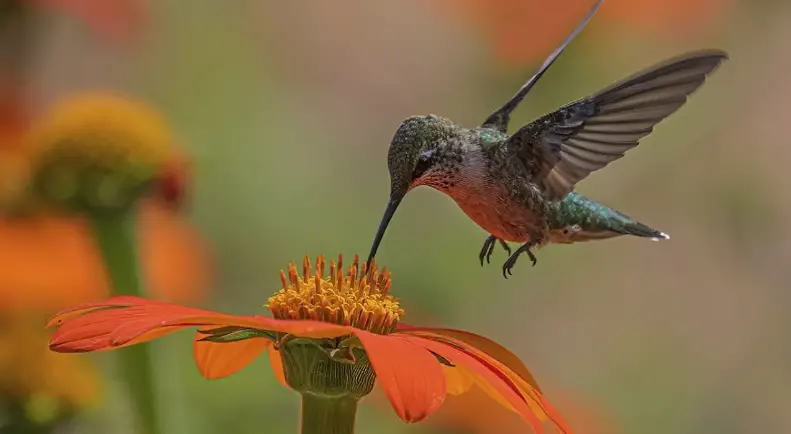
Hummingbirds are delightful visitors to any garden, bringing life and vibrancy with their rapid wing beats and beautiful colors. Attracting these tiny birds to your garden is easier than you might think, especially if you plant their favorite flowers. Here are five plants that will entice hummingbirds to visit your green spaces:
1. Trumpet Vine (Campsis radicans)
- Description: Trumpet vine is a vigorous climber with bright orange or red trumpet-shaped flowers.
- Bloom Time: Summer to early fall.
- Why Hummingbirds Love It: The tubular flowers are perfect for hummingbirds’ long beaks and provide a rich source of nectar.
- Growing Tips: Plant in full sun to partial shade. It thrives in well-drained soil and needs regular pruning to keep it under control.
2. Bee Balm (Monarda didyma)
- Description: Bee balm, also known as Monarda, is a perennial with striking, shaggy flowers in shades of red, pink, purple, and white.
- Bloom Time: Mid-summer to late summer.
- Why Hummingbirds Love It: The vibrant, nectar-rich flowers are a favorite among hummingbirds.
- Growing Tips: Plant in full sun to partial shade. It prefers moist, well-drained soil and can be divided every few years to maintain vigor.
3. Salvia (Salvia spp.)
- Description: Salvias are a diverse group of plants with spikes of tubular flowers in various colors, including red, purple, blue, and pink.
- Bloom Time: Spring to fall, depending on the species.
- Why Hummingbirds Love It: The long, tubular flowers are ideal for hummingbirds and provide continuous blooms throughout the season.
- Growing Tips: Plant in full sun. Salvias are drought-tolerant and prefer well-drained soil.
4. Columbine (Aquilegia spp.)
- Description: Columbine is a perennial with delicate, nodding flowers in a range of colors, including red, yellow, blue, and purple.
- Bloom Time: Spring to early summer.
- Why Hummingbirds Love It: The unique, spurred flowers attract hummingbirds with their shape and nectar.
- Growing Tips: Plant in partial shade to full sun. It prefers well-drained soil and can self-seed in the garden.
5. Fuchsia (Fuchsia spp.)
- Description: Fuchsia is a shrub with pendulous, two-toned flowers in shades of pink, purple, red, and white.
- Bloom Time: Spring to fall.
- Why Hummingbirds Love It: The dangling flowers are full of nectar and easily accessible to hummingbirds.
- Growing Tips: Plant in partial to full shade. Fuchsias prefer cool, moist conditions and well-drained soil.
Additional Tips for Attracting Hummingbirds
- Provide Water: A shallow birdbath or a mister can attract hummingbirds, as they enjoy bathing and drinking water.
- Avoid Pesticides: Pesticides can harm hummingbirds and reduce the number of insects they feed on. Opt for organic gardening methods.
- Create Perching Spots: Hummingbirds need places to rest. Incorporate small trees, shrubs, or even specialized perching structures in your garden.
- Add a Hummingbird Feeder: Supplement the natural nectar sources with a hummingbird feeder filled with a mixture of four parts water to one part sugar. Clean the feeder regularly to prevent mold and bacteria.
Summary
Attracting hummingbirds to your garden involves planting a variety of nectar-rich flowers such as trumpet vine, bee balm, salvia, columbine, and fuchsia. These plants not only provide the necessary nourishment but also add vibrant colors and textures to your garden. With the addition of water sources, organic gardening practices, and perching spots, you can create a hummingbird haven that will be visited frequently by these enchanting birds.


