Nurturing Greenery: Growing Betel Leaf Trees from Leaf Eyes and Cultivating Pothos Trees
Growing plants from leaf cuttings is a fascinating and rewarding process, offering a sustainable way to expand your green haven. In this guide, we’ll delve into the art of cultivating Betel Leaf Trees from leaf eyes and share insights into growing the versatile and popular Pothos tree through propagation.
Growing Betel Leaf Trees from Leaf Eyes
- Selecting Healthy Betel Leaves: Begin the process by selecting healthy and disease-free Betel leaves. Choose leaves with prominent and well-formed eyes, which are the small nodes along the leaf’s central vein.
- Preparing the Potting Mix: Use a well-draining potting mix for propagating Betel Leaf Trees. A mix that combines garden soil, perlite, and coconut coir or peat moss works well. Ensure the potting mix is moist but not waterlogged.
- Harvesting Leaf Eyes: Carefully cut the Betel leaves, ensuring that each cutting contains at least one or two well-developed leaf eyes. These eyes are the key to successful propagation, as they harbor the potential for new growth.
- Planting the Leaf Eyes: Create small holes in the potting mix using a stick or pencil. Gently insert the Betel leaf cuttings into the holes, ensuring the leaf eyes are beneath the surface. Firm the soil around the cuttings to provide stability.
- Maintaining Moisture and Humidity: Keep the potting mix consistently moist to promote root development. Maintain a high level of humidity around the cuttings by covering them with a plastic bag or using a propagation tray.
- Providing Indirect Light: Place the container with Betel leaf cuttings in an area with indirect sunlight. Protect them from harsh midday sun, as young cuttings can be sensitive. A bright but filtered light is ideal for encouraging successful propagation.
- Root Development and Transplanting: After a few weeks, you should observe roots developing from the leaf eyes. Once the cuttings have established a robust root system, carefully transplant them into individual pots filled with well-draining soil.
How to Grow the Pothos Tree through Propagation
- Selecting Healthy Pothos Cuttings: Pothos, also known as Devil’s Ivy, is a resilient and popular houseplant. Select healthy Pothos cuttings with at least 6 inches in length, ensuring each cutting has several leaves.
- Preparing the Propagation Container: Choose a container with drainage holes and fill it with a mixture of potting soil and perlite or coco coir for added aeration. Dampen the soil to make it easier for the cuttings to establish roots.
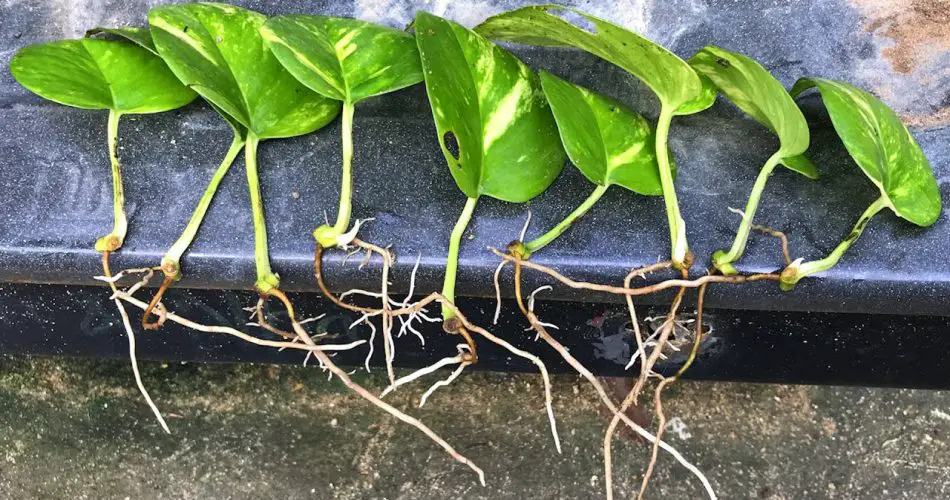
- Taking Pothos Cuttings: Use sharp scissors or pruning shears to take Pothos cuttings, ensuring each cutting has at least one or two nodes. Nodes are the points on the stem where leaves and roots emerge.
- Rooting in Water (Optional): Pothos cuttings can be rooted in water before planting in soil. Place the cuttings in a jar with water, ensuring that nodes are submerged. Once roots are several inches long, transfer the cuttings to soil.
- Planting Pothos Cuttings: If not rooting in water, insert the Pothos cuttings directly into the prepared soil, ensuring nodes are beneath the surface. Plant multiple cuttings in the same container, allowing them to grow together for a fuller appearance.
- Providing Ideal Conditions: Place the Pothos cuttings in an area with bright, indirect light. Pothos is adaptable and can tolerate lower light conditions, but bright light encourages faster growth. Maintain moderate watering, allowing the top inch of soil to dry between waterings.
- Transplanting and Care: Once the Pothos cuttings have established a strong root system and show signs of new growth, consider transplanting them into individual pots or hanging baskets. Continue caring for them by providing suitable light, water, and occasional fertilization.
Growing Betel Leaf Trees from leaf eyes and cultivating Pothos trees through propagation are satisfying endeavors that allow you to expand your plant collection with minimal resources. By following these steps, you’ll witness the beauty of new growth and enjoy the lush greenery of these resilient and versatile plants in your home. Embrace the joy of nurturing and propagating plants as you watch them thrive and bring life to your living spaces.