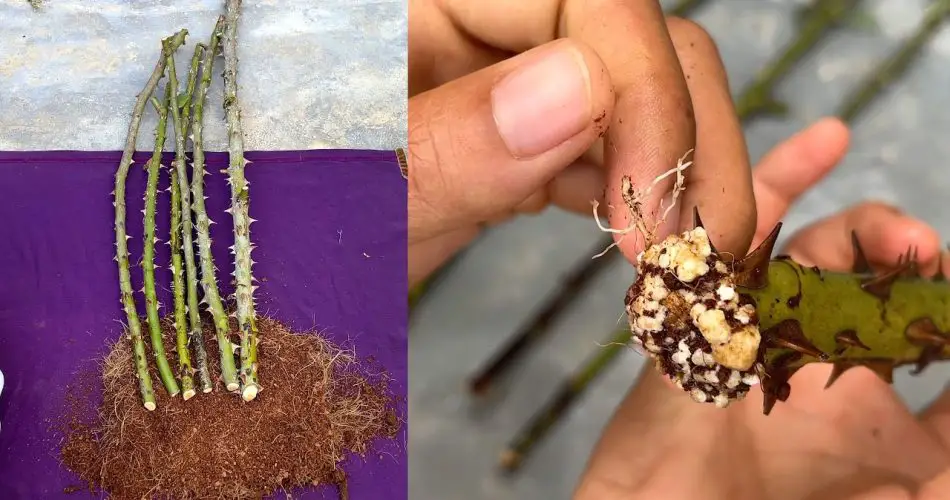
“Rooting for Success: Growing Roses Without Soil – A Guide to Propagation”
Growing roses from cuttings is a fulfilling and cost-effective way to expand your rose garden. In this article, we’ll explore a simple yet effective method of cutting roses without soil, allowing you to help the rose branch take root effortlessly. Follow these steps to propagate beautiful roses and add a touch of elegance to your garden.
- Selecting Healthy Rose Cuttings:
- Vibrant Beginnings: Choose healthy rose branches for propagation. Look for branches that are free from diseases or pests, with firm stems and at least two or three nodes. Selecting the right cuttings is essential for successful rooting.
- Preparing the Cuttings:
- Cutting Confidence: Use clean and sharp pruning shears to take cuttings from your chosen rose bush. Each cutting should be around 6 to 8 inches in length and include several healthy leaves. Trim the cutting just below a leaf node for optimal results.
- Removing Lower Leaves:
- Focus on Roots: Strip the lower leaves from the cutting, leaving only a few leaves at the top. This directs the plant’s energy toward root development rather than sustaining excess foliage.
- Dipping in Rooting Hormone (Optional):
- Root Boost: While optional, dipping the cut end of the rose cutting in rooting hormone can expedite the rooting process. Rooting hormone encourages the development of roots and increases the chances of successful propagation.
- Water Propagation Method:
- Aquatic Growth: Instead of soil, use a container filled with clean water for your rose cuttings. Submerge the cut ends of the rose branches in the water, ensuring that the nodes are covered. Change the water regularly to maintain cleanliness and oxygen levels.
- Choosing a Bright Location:
- Sunlit Sanctuary: Place the container with the water-submerged rose cuttings in a location with bright, indirect sunlight. Adequate sunlight is crucial for the cuttings to generate energy for root development.
- Patience and Observation:
- Root Watch: Be patient and observe the cuttings for signs of root development. Over time, you will notice roots emerging from the submerged nodes. This process may take a few weeks, so exercise patience during this crucial phase.
- Transplanting Rooted Roses:
- Soil Transition: Once the rose cuttings have developed healthy roots, carefully transplant them into well-draining soil. Choose a pot or garden location with suitable sunlight exposure and soil conditions for continued growth.
- Watering and Care:
- Hydration Harmony: Adjust your watering routine as the transplanted roses acclimate to the soil. Ensure the soil remains consistently moist without becoming waterlogged. Regular watering and proper care contribute to the overall health and vigor of the newly propagated roses.
- Enjoying Blooms from Your Efforts:
- Garden Triumph: Congratulations, you have successfully propagated roses without soil! Watch as your cuttings grow into flourishing rose bushes, eventually gracing your garden with vibrant blooms. Your efforts in nurturing these roses from cuttings will be rewarded with a garden filled with beauty and fragrance.
Conclusion: Cutting roses without soil is a simple yet effective method for propagating these beloved flowers. By following these steps, you can transform healthy rose cuttings into thriving bushes, bringing beauty and elegance to your garden. Embrace the joy of growing roses from your efforts and enjoy the bountiful blooms that will grace your outdoor space.


