Mold on potting soil is a common issue for houseplant owners. Since mold can spread to the plant and cause damage, it’s crucial to take urgent action. Additionally, some molds can be harmful to health as they may enter the respiratory tract through the air.
In this article, we’ll explain how to recognize moldy soil, effective household remedies, and preventive measures to keep your plants healthy.
1. Recognize Mold
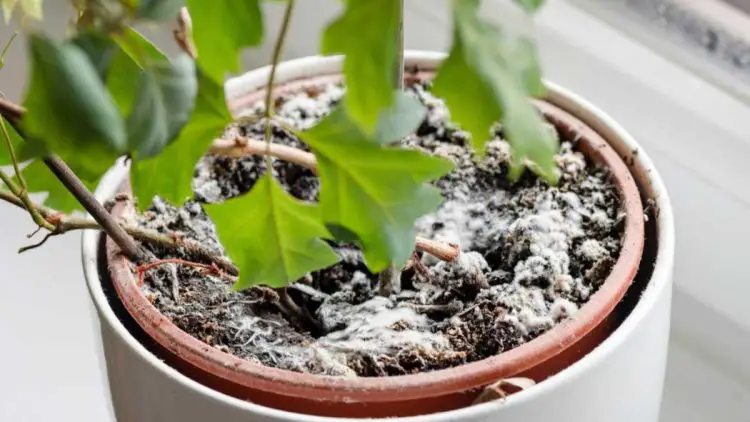
Not every whitish layer on the soil is mold. Sometimes, it can be a deposit of limestone from watering. This residue remains when the water evaporates and can be recognized by its hardness and friability. If it’s just limestone, it poses no harm and can be easily removed with a spoon.
However, if the layer is soft and hairy, it’s likely mold. Simply scraping off the top layer of soil isn’t enough, as the invisible mycelium of the mold extends deeper into the soil.
2. Fight Mold on Potting Soil with Household Remedies
If your soil is heavily infested with mold, follow these steps:
- Repot the Plant: Place it outside to prevent mold spores from entering your home.
- Remove Moldy Soil: Take off most of the root ball, disposing of the moldy soil in compost or household trash.
- Clean the Pot: Wash the flower pot with rubbing alcohol or vinegar. For terracotta pots, you can heat them in the oven at 200 °C for 20 minutes to kill mold spores.
- Use Fresh Soil: When replanting, lightly trim the roots with clean scissors, especially during fall and winter when plants are dormant. This prevents mold from spreading.
3. Take Precautions Against Mold
Mold often thrives in conditions of waterlogging or persistent moisture. Here are some tips to help prevent mold growth:
- Check Soil Moisture: Before watering, ensure the top layer of soil is dry. Overwatering is a common issue, especially in winter.
- Use Drainage: Choose pots with drainage holes and use a coffee filter to prevent soil loss. For plants that need less water, water through the saucer so the soil absorbs moisture gradually.
- Add Drainage Layers: A layer of expanded clay at the bottom of the pot can help excess water drain effectively.
- Repot Regularly: Regular repotting prevents soil from becoming silted up, which can lead to poor drainage and mold growth.
- Sprinkle Bird Grit: Adding bird grit on the surface helps water evaporate and reduces mold risk.
4. Measures to Avoid
While there are many recommendations online, some can be counterproductive or harmful to your plants:
- Avoid Just Sprinkling Sand: Simply adding bird sand on top of mold doesn’t solve the problem, as the mold will continue to grow beneath it.
- Handle Roots Carefully: When removing old potting soil, avoid damaging the roots. There’s no need to completely strip the roots of their soil, as this complicates repotting.
- Skip Fungicides: Don’t add fungicides or other mold remedies to your irrigation water, as these can harm both the mold and your plants.
- Don’t Rub Roots with Alcohol: Rubbing alcohol or vinegar can be more harmful than beneficial to your plants.
With these essential tips, your houseplants will be well-equipped to combat mold and thrive in their environment!