Nurturing Uniqueness: Transplanting Euphorbia Lactea and Grafted Euphorbia Lactea Cristata
Euphorbia Lactea, a striking succulent with vertical, cactus-like stems, is known for its unique appearance and resilience. For those fascinated by the peculiar charm of the Grafted Euphorbia Lactea Cristata, the crest-shaped mutation, transplanting becomes a crucial aspect of care. In this guide, we’ll explore the steps for successfully transplanting both the Euphorbia Lactea and its captivating Cristata variant.
Transplanting Euphorbia Lactea: A Cactus with Character
- Choosing the Right Time: Transplant Euphorbia Lactea during its active growing season, typically in spring or early summer. This allows the plant to recover and establish itself more effectively.
- Selecting a Suitable Pot: Euphorbia Lactea requires well-draining soil and a pot with drainage holes. Choose a pot slightly larger than its current one, providing enough room for root development.
- Handling with Care: Before transplanting, ensure the plant is well-hydrated. Euphorbia Lactea has latex-containing sap, which can be irritating to the skin and eyes. Wear protective gloves and handle the plant carefully.
- Removing from the Current Pot: Gently tip the pot and tap the bottom to loosen the plant. Slide the Euphorbia Lactea out of its container, being cautious not to damage the roots. If the roots are tightly packed, tease them apart for better growth.
- Inspecting the Roots: Examine the roots for any signs of rot or damage. Trim away any unhealthy roots with clean, sharp scissors or pruning shears.
- Placing in the New Pot: Position the Euphorbia Lactea in the center of the new pot, ensuring it sits at the same depth as it did in the previous container. Fill the remaining space with a well-draining cactus or succulent mix.
- Watering After Transplanting: Water the Euphorbia Lactea thoroughly after transplanting to help settle the soil. Allow excess water to drain away, and refrain from watering again until the top inch of the soil feels slightly dry.
- Providing Adequate Light: Place the transplanted Euphorbia Lactea in a location with bright, indirect sunlight. These succulents thrive in well-lit conditions but should be protected from intense, direct sunlight.
Grafted Euphorbia Lactea Cristata: Transplanting the Unique Crested Beauty
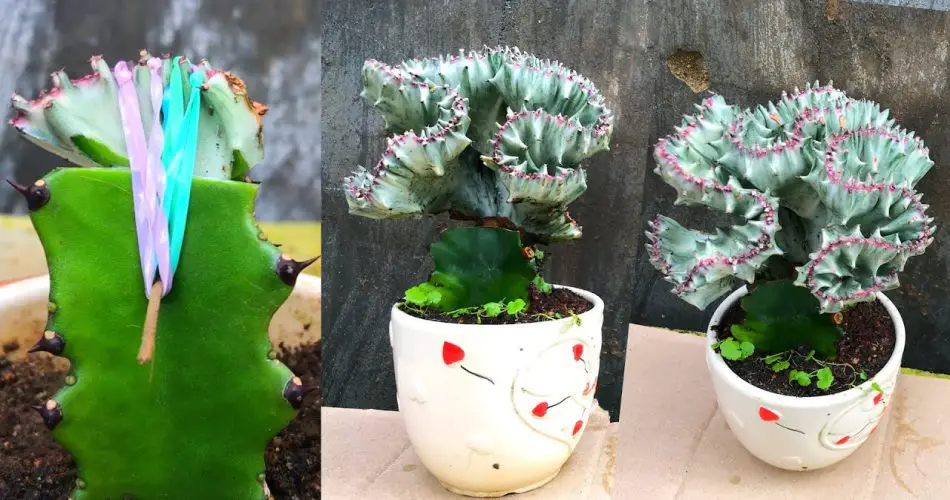
- Understanding Grafted Euphorbia Lactea Cristata: The Cristata mutation, characterized by a crest-shaped growth pattern, adds an extra layer of uniqueness to the Euphorbia Lactea. Transplanting this variant follows a similar process but requires extra care due to the distinctive form.
- Handling the Crest with Care: The crested part of the plant is more delicate than the regular stems. When transplanting Grafted Euphorbia Lactea Cristata, handle the crest with utmost care to avoid any damage.
- Selecting an Appropriate Container: Choose a pot that accommodates both the regular stems and the crest. Ensure the container has adequate drainage and provides stability for the unique growth form.
- Follow Transplanting Steps for Euphorbia Lactea: Utilize the steps mentioned earlier for transplanting Euphorbia Lactea, paying special attention to the crest. Grafted Euphorbia Lactea Cristata may have a more complex root system, so exercise caution during the process.
- Maintaining Post-Transplant Care: After transplanting, continue caring for Grafted Euphorbia Lactea Cristata with the same considerations as the regular Euphorbia Lactea. Ensure it receives proper light, avoid overwatering, and protect it from extreme temperature fluctuations.
Transplanting Euphorbia Lactea and its captivating Cristata variant is a rewarding venture that allows you to provide optimal conditions for their growth and well-being. By following these guidelines and handling these unique succulents with care, you can enjoy the continued beauty of these fascinating plants in your collection.