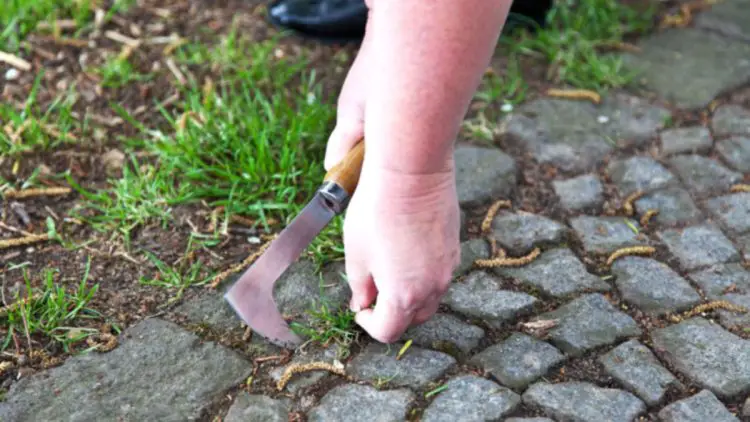
Weeds growing between paving stones can be a persistent nuisance, but with the right approach, you can keep your joints clean and free of unwanted plants. Below, we’ll discuss various methods to remove weeds from joints and what to avoid in the process.
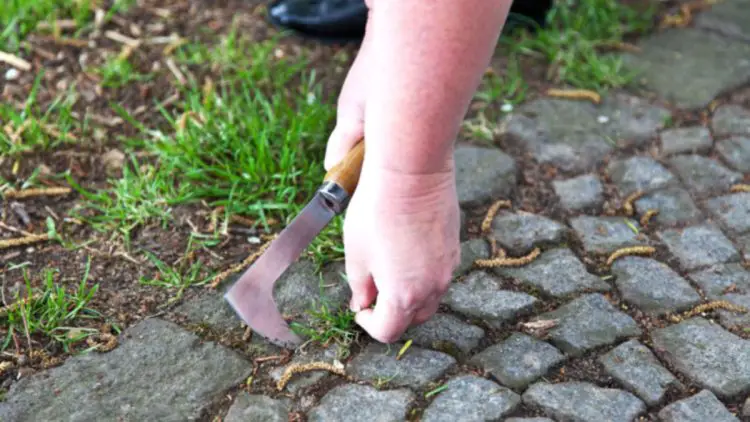
1. Joint Scraper
Using a joint scraper is a traditional but effective method for removing weeds. While this approach is tedious, it preserves both your paving stones and the environment. Here’s how to do it:
- Tools: You will need a joint scraper and a broom. For wider spaces between paving stones, a weeder can also be useful.
- Technique: Carefully scrape the weeds from the joints. Doing this by hand helps protect your back, especially if you use a scraper with a handle. After rain, the soil is softer, making it easier to pull out weeds along with their roots, ensuring they don’t grow back.
- Tip: Use a joint brush to sweep away the loosened weeds, making the task easier.
Note: If it hasn’t rained recently, the roots will not be as anchored in the soil, making them easier to pull out.
2. Pressure Washer
A pressure washer is an efficient, environmentally friendly way to remove weeds from joints with minimal effort. However, you need to take care to avoid damaging the joint material.
- Method: Use lukewarm water and direct the jet at a 45-degree angle. This angle helps prevent damage to the joints while still providing enough pressure to remove the weeds.
- Tip: If you don’t own a pressure washer, many DIY stores offer them for rent. Make sure to follow proper usage instructions to get the best results.
3. Gas Burner
A gas burner is another method for removing weeds, though it comes with some disadvantages:
- How it Works: The heat from the burner causes the weeds to wither, and after a few days, you can simply collect the remnants from the joints.
- Risks: This method can harm the environment and paving stones. It’s also potentially dangerous, so it’s important to wear protective clothing and remove any flammable materials from the area. Always have a bucket of water nearby for safety.
4. Using Chemicals: Not Recommended
While it may be tempting to use chemical weed killers, this approach is not only harmful to your garden, but it’s also illegal in many places:
- Environmental Concerns: Chemical weed killers can contaminate surface water, which eventually reaches groundwater, harming plants and wildlife.
- Legality: According to the Plant Protection Act, the use of chemical weed killers on terraces, driveways, and sidewalks is prohibited. Home remedies like vinegar or salt are also banned. Fines of up to €50,000 can be imposed for non-compliance.
- Alternative: Instead of chemicals, consider using hot water or stick to the first three methods mentioned for a safer, effective solution.
Preventing Future Weeds
Once you’ve removed the weeds, you can prevent them from coming back by using joint sand. This sand fills in the gaps and creates an environment that’s less conducive to weed growth.
Conclusion
Removing weeds from joints can be a labor-intensive process, but with the right tools and methods, you can tackle the problem effectively. Remember to avoid chemicals, and instead, try scraping, using a pressure washer, or a gas burner. Good luck with your gardening, and we hope these tips help you keep your paving stones clean and weed-free!


