Rooted Elegance: Propagating Roses with Toilet Paper for Successful Extraction
Unlock the secrets of propagating roses with a simple and surprising medium – toilet paper. This unconventional yet effective method not only demonstrates the resilient nature of roses but also provides an accessible and cost-effective way to expand your rose garden. In this guide, we’ll explore the steps to extract roses using toilet paper and witness the beautiful results as your roses take root.
Propagating Roses with Toilet Paper: A Step-by-Step Guide
Materials Needed:
- Healthy Rose Cuttings:
- Select healthy and disease-free rose cuttings from your desired rose variety. Choose stems with at least two nodes.
- Toilet Paper:
- Use plain, unbleached toilet paper for this propagation method. The simplicity of this material allows for easy water absorption and encourages root development.
- Rooting Hormone (Optional):
- While optional, rooting hormone can enhance the chances of successful rooting. It provides a boost to the cutting by promoting the development of roots.
- Plastic Bag or Plastic Wrap:
- Create a mini-greenhouse effect by covering the rose cuttings with a plastic bag or plastic wrap. This helps maintain humidity, crucial for successful rooting.
Steps:
- Prepare Rose Cuttings:
- Take 6 to 8 inches long rose cuttings, making sure each cutting has at least two nodes (the points where leaves are attached to the stem). Trim the cutting just below a node at a 45-degree angle using clean, sharp pruning shears.
- Apply Rooting Hormone (Optional):
- If you choose to use rooting hormone, dip the cut end of each rose cutting into the hormone powder. Shake off excess powder to ensure a thin, even coating.
- Wrap with Toilet Paper:
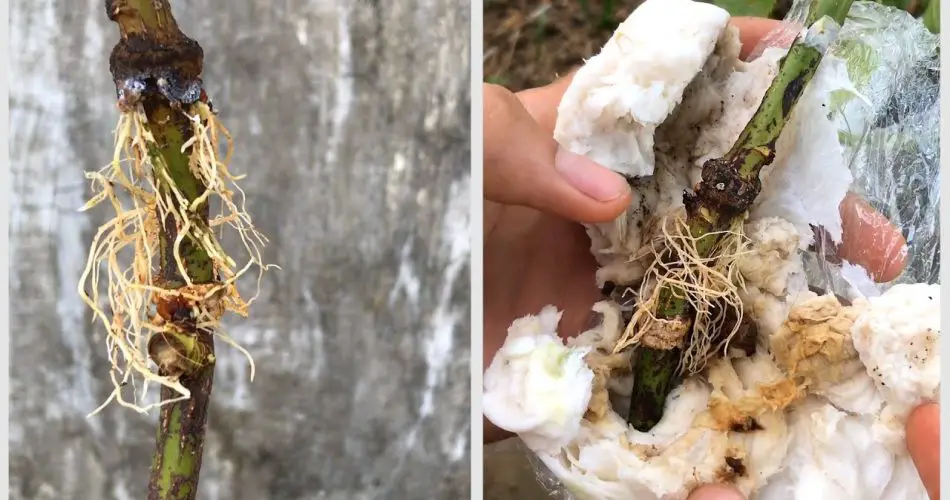
- Moisten a sheet of toilet paper, then wrap it around the lower portion of the rose cutting. Ensure that the toilet paper is snugly wrapped, covering the cut end of the stem. This creates a protective and moist environment for root development.
- Secure and Enclose:
- Secure the toilet paper-wrapped cutting by placing it in a plastic bag or wrapping it with plastic wrap. This enclosure helps maintain humidity around the cutting, promoting successful rooting.
- Place in Indirect Light:
- Position the wrapped rose cuttings in a location with indirect light. Avoid direct sunlight, as it may cause excessive drying. Check the moisture level regularly, ensuring the toilet paper remains damp.
- Monitor and Transplant:
- After a few weeks, monitor the progress of your rose cuttings. Once you observe healthy root development, transplant the rooted cuttings into individual pots or directly into the garden.
Tips for Successful Rose Propagation:
- Choose Healthy Cuttings:
- Start with healthy and disease-free rose cuttings to maximize the chances of successful rooting.
- Maintain Humidity:
- Consistently maintain humidity around the cuttings by keeping the toilet paper damp and enclosing them in a plastic bag or wrap.
- Patience is Key:
- Rooting can take several weeks, so be patient and allow sufficient time for the roses to establish roots.
- Transplant with Care:
- When transplanting, handle the rooted cuttings with care to avoid damaging the delicate new roots.
By using toilet paper as a medium for rose propagation, you’re not only recycling a common household item but also providing a conducive environment for your roses to take root and flourish. Embrace the simplicity of this method and enjoy the satisfaction of witnessing your beautiful roses bloom from humble beginnings.