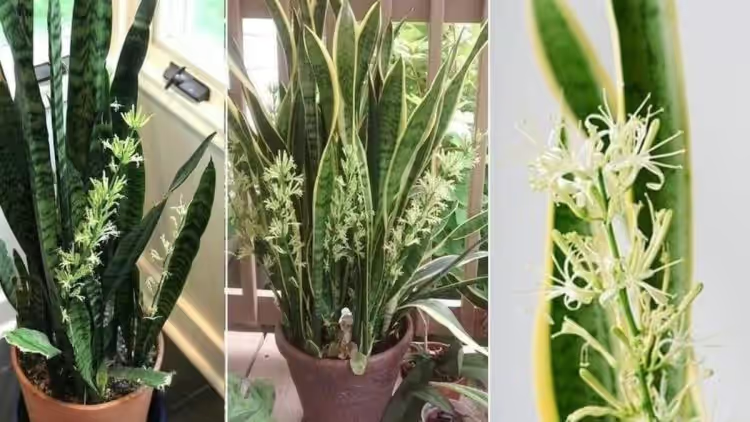
Sansevieria, also known as snake plant, is a popular houseplant loved for its low maintenance needs and air-purifying properties. This hardy plant belongs to the Asparagaceae family and thrives in a variety of indoor conditions.
Whether you already have one or are planning to get one, here’s everything you need to know about caring for Sansevieria!
🌿 Why Choose Sansevieria?
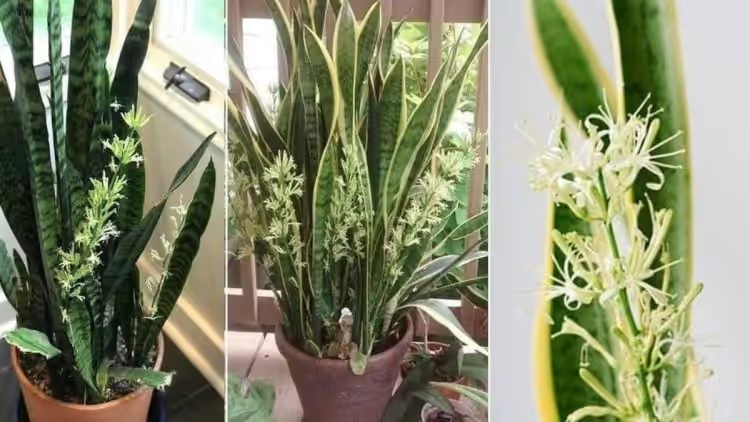
Sansevieria isn’t just an aesthetic plant—it’s also a natural air purifier. It produces oxygen 24/7 while absorbing pollutants, making it an excellent choice for homes and offices.
Popular Sansevieria Varieties
✔ Sansevieria Trifasciata – Narrow, elongated leaves with green and yellow tones (commonly called mother-in-law’s tongue).
✔ Sansevieria Cylindrica – Long, upright, tube-shaped leaves (can be braided for a unique look).
✔ Sansevieria Hahnii – Compact variety with rosette-shaped leaves, perfect for small spaces.
✔ Sansevieria Moonshine – Silvery-green leaves that resemble the surface of the moon.
✔ Sansevieria Masoniana – Also called shark fin, with a large, single leaf emerging from its base.
☀ Ideal Conditions for Sansevieria
📍 Where to Place Your Sansevieria
Sansevieria loves light but should not be exposed to direct sunlight for long hours.
✔ Place it in a bright spot with indirect light.
✔ It thrives in moderate indoor temperatures (18°C to 27°C).
✔ In winter, keep it indoors—it doesn’t tolerate temperatures below 3°C.
💧 Watering & Maintenance
How Often Should You Water It?
Sansevieria behaves like a succulent—it stores water in its leaves and doesn’t need frequent watering.
✔ Water only when the soil is completely dry.
✔ In summer, water every few weeks.
✔ In winter, water only once a month.
✔ Avoid overwatering, as it can lead to root rot.
💡 Tip: Never spray water on the leaves—Sansevieria doesn’t like extra moisture on its foliage!
🏺 Potting & Soil Care
Choosing the Right Soil
Sansevieria thrives in well-draining soil to prevent root rot.
✔ Use a mix of all-purpose potting soil with sand or perlite.
✔ Add clay pebbles or broken pottery at the bottom for better drainage.
✔ A liquid fertilizer can be added occasionally if the soil is too dry.
When to Repot?
Sansevieria grows slowly, so repotting isn’t needed every year. However, when the roots fill up the pot, repot in spring.
✔ If repotting isn’t needed, just replace the top layer of soil with fresh soil.
✂ Pruning & Propagation
Does Sansevieria Need Pruning?
No major pruning is needed! Just remove dry or diseased leaves to keep the plant healthy.
How to Propagate Sansevieria
Sansevieria can be easily propagated by leaf cuttings.
✔ In summer, cut a healthy leaf into several sections.
✔ Leave the cuttings to dry for a few days.
✔ Plant them in moist soil and keep the pot at around 21°C.
✔ In a few weeks, new roots will start growing!
🦠 Common Problems & Solutions
1️⃣ Brown Spots or Rotting Leaves
💡 Cause: Overwatering.
✔ Remove the plant from the pot, cut off rotten roots, and let it dry before repotting.
2️⃣ Fading or All-Green Leaves
💡 Cause: Not enough light—some Sansevieria varieties lose their unique color if kept in low light.
✔ Move it to a brighter location.
3️⃣ Pests (Mealybugs & Scale Insects)
💡 Solution: Wipe the leaves with a cotton ball soaked in alcohol or gently scrape off insects.
🌱 Final Thoughts
Sansevieria is a resilient, stylish, and beneficial houseplant that requires minimal care. Whether you’re a beginner or a seasoned plant lover, it’s the perfect addition to any home.
✨ Do you already own a Sansevieria? Which variety is your favorite? Let us know! 😊