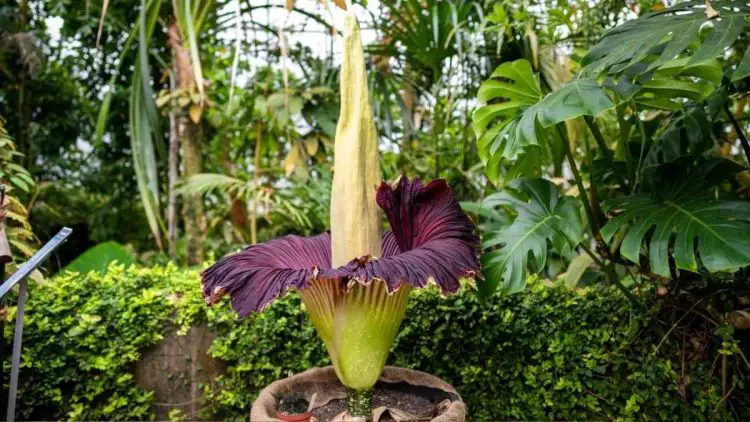
While flowers are often cherished for their beauty and pleasant scents, some plants boast appearances that might catch your eye but come with a notably foul odor. Here are five plants that, despite their visual appeal, produce such repulsive smells that they can make your garden a no-go zone for humans—though they might still attract some unusual visitors.
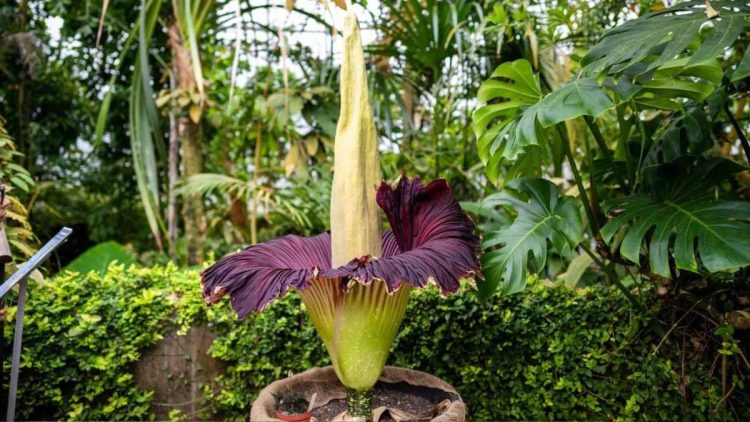
1. Arum Titan (Amorphophallus titanum)
The Arum Titan, also known as the titan arum, is renowned for its massive inflorescences that can reach up to three meters in height. Native to Southeast Asia and featured in some botanical gardens, this plant is famous for emitting a pestilential odor akin to rotting carrion. While the smell is unbearable for people, it attracts insects crucial for pollination. Witnessing its flowering is a rare and spectacular event—just don’t get too close!
2. Phuopsis Stylosa
With its ball-shaped flowers in shades of pink and lilac, the Phuopsis Stylosa is visually striking. However, its appealing appearance is marred by its distinctive odor, especially in damp conditions. The plant emits a smell reminiscent of wet fur, leading to its nickname “wet fox.” Though some might describe the scent as spicy-sweet, it’s a significant deterrent for many gardeners.
3. Asafetida (Ferula assa-foetida)
The Asafetida plant, with its pale yellow inflorescences, lives up to its less-than-flattering nicknames such as “devil’s shit” and “asa fetid.” Its taproot contains a foul-smelling sap that releases a pungent garlic-like odor. This sap, once dried, is used as a condiment in various cuisines, particularly in India, Pakistan, and Iran, and even in Worcestershire sauce. A strong-smelling plant for sure, but with a surprising culinary twist!
4. Sauge Sclarée (Salvia sclarea)
Clary Sage, or Sauge Sclarée, is native to the Mediterranean and can grow up to 120 cm tall. It features elegant pink to lilac flowers that bloom from June to August. While some appreciate its spicy and aromatic scent, others find it strongly reminiscent of sweat. Despite its polarizing aroma, clary sage is valued for its medicinal properties, used to treat inflammations and headaches.
5. Amphitecna Macrophylla
The Amphitecna Macrophylla is adapted to attract nocturnal bats, which are drawn to its cabbage-like scent. This plant, belonging to the Bignoniaceae family, gives off a characteristic odor of cabbage, particularly noticeable at night. If you’re not keen on having a garden that smells like cabbage, this plant might not be the best choice.
Conclusion
While these five plants offer unique visual appeal, their overpowering odors may outweigh their aesthetic value. Thankfully, many other plants provide both beauty and a pleasant fragrance for a more enjoyable garden experience. Consider these alternatives if you want to avoid the olfactory offense of the plants listed here.


