The Art of Contour: Posing Adenium Bonsai with Home Bending Techniques
Bonsai trees, with their miniature allure and timeless elegance, often captivate enthusiasts seeking to infuse their living spaces with a touch of nature. Adenium bonsai, renowned for their unique caudex and vibrant blooms, can be transformed into living artworks through the artful practice of bending. In this article, we explore the delicate yet rewarding process of posing Adenium bonsai, offering insights into how enthusiasts can bend these miniature masterpieces within the comfort of their homes.
How to Bend Adenium Bonsai at Home:
- Selecting the Right Candidate: Begin the art of bending Adenium bonsai by selecting a healthy and well-established tree. Look for a specimen with a sturdy caudex and branches that are pliable yet not too rigid. This will ensure a successful bending process without causing undue stress to the tree.
- Timing is Crucial: The ideal time for bending Adenium bonsai is during the active growing season. Spring and early summer provide the optimal conditions for flexibility in the branches. Avoid attempting bending during periods of dormancy or extreme environmental stress.
- Hydration Preparation: Before initiating the bending process, ensure that the Adenium bonsai is well-hydrated. Adequate water uptake makes the branches more pliable and reduces the risk of breakage during the bending procedure.
- Gradual Bending Technique: Employ a gradual bending technique to avoid sudden stress on the branches. Gently coax the branches in the desired direction, bending a little at a time. This gradual approach encourages the tree to adapt to its new form without shock.
- Utilizing Wiring Techniques: To further refine the bending process, utilize wiring techniques. Wrap the branches with bonsai wire, adjusting the tension to guide the bending. Be cautious not to wrap too tightly to prevent damage to the bark or restricting nutrient flow.
- Patience is a Virtue: Successful bending of Adenium bonsai requires patience. Allow the tree time to acclimate to its new form, and monitor its response over several weeks. Regularly inspect the wired branches, making adjustments as needed.
- Post-Bending Care: Following the bending process, provide extra care to the Adenium bonsai. Ensure the tree receives adequate sunlight, water, and nutrients to support recovery and continued growth. Regularly inspect the wired branches for any signs of stress or damage.
Results of Home Bending Techniques:
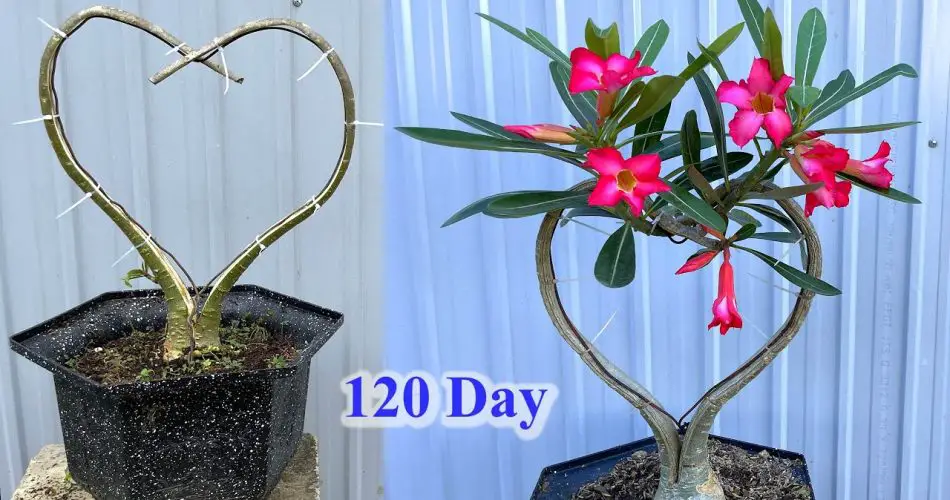
- Artful Contour and Personalized Aesthetics: Home bending techniques bestow Adenium bonsai with artful contours, allowing enthusiasts to impart a personalized touch to the tree’s aesthetics. This hands-on approach creates unique and visually captivating forms.
- Enhanced Resilience and Adaptability: Adenium bonsai subjected to home bending techniques often exhibit enhanced resilience and adaptability. The gradual bending process encourages the tree to develop flexibility, making it more resilient to environmental changes.
- Living Sculptures with Character: Embracing the art of bending at home transforms Adenium bonsai into living sculptures with character. Enthusiasts can witness the evolution of their bonsai, each bend telling a story of careful cultivation and artistic expression.
Conclusion:
Posing Adenium bonsai through home bending techniques invites enthusiasts into the realm of living artistry. As they delicately mold and shape these miniature masterpieces, the Adenium bonsai not only responds with grace but also becomes a testament to the careful artistry and dedication of its cultivator.