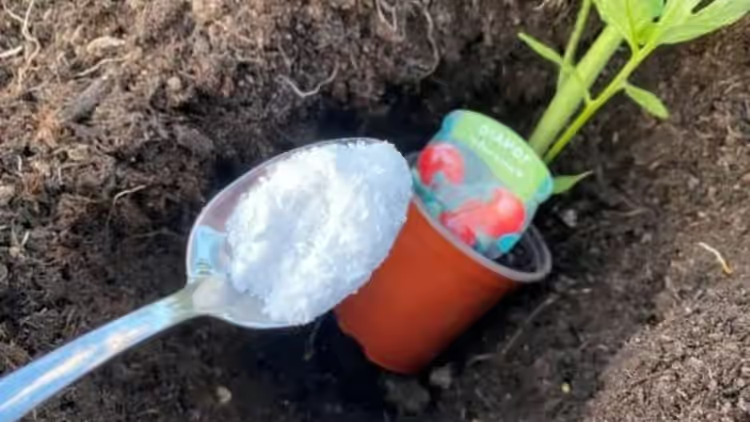
Gardeners have tried-and-true methods for growing the best tomatoes, from using eggshells and banana peels to coffee grounds and other natural fertilizers. But have you ever heard of salting tomatoes?
While there are many myths about gardening tricks, this one has real benefits—but not with the table salt you use in the kitchen. Instead, Epsom salt is the key ingredient! Read on to discover why and how you should use it for healthier, tastier, and more productive tomato plants.

🧂 What Kind of Salt Should You Use?
The salt used in gardening is not regular table salt but rather Epsom salt (magnesium sulfate). It is highly beneficial for tomato plants, especially if they suffer from magnesium deficiency.
Magnesium is essential for photosynthesis, and sulfur helps in the production of enzymes and proteins. Many gardeners swear by Epsom salt as a natural solution to fix problems like yellowing leaves, poor growth, and low yields.
🌿 1. Remedy for Yellowing Leaves
If your tomato leaves turn yellow, it could be due to:
🚫 Improper watering
🚫 Fungal diseases
🚫 Pest infestations
🚫 Nutrient deficiencies
One common and easily fixable cause is magnesium deficiency. Since Epsom salt is rich in magnesium, it can quickly reverse the problem.
✔️ How to Fix It:
✅ Mix 1 tablespoon of Epsom salt into 5 liters of warm water.
✅ Spray the mixture generously on the leaves and stems.
✅ Water the soil with the remaining solution.
✅ Apply in the morning so the leaves can absorb nutrients before the sun gets too strong.
🌱 Result: Your tomato plants will recover quickly, and the leaves will turn green and healthy again!
🍅 2. Improves the Taste of Tomatoes
The flavor of tomatoes depends on their nutrient intake. Without magnesium and sulfur, tomatoes can lack sweetness and depth in taste.
Epsom salt enhances photosynthesis (thanks to magnesium) and boosts protein production (thanks to sulfur), leading to more flavorful tomatoes.
✔️ How to Use It for Better Flavor:
✅ Add 1 tablespoon of Epsom salt for every 30 cm of plant height.
✅ Split the amount into two waterings per week.
✅ Use a foliar spray or watering can to apply it.
🌱 Result: Well-nourished tomato plants will produce juicier, sweeter, and tastier fruits!
📈 3. Stimulates Plant Growth
Tomato plants need the right nutrients to grow strong and productive. Without magnesium, plants struggle to photosynthesize, meaning they can’t convert sunlight into energy. Even with perfect sunlight, tomatoes with low magnesium levels will have weak growth and fewer fruits.
✔️ How to Boost Growth with Epsom Salt:
✅ Use as a foliar spray (mix 1 tablespoon in 5 liters of water and spray on leaves).
✅ Or add Epsom salt to the soil while watering.
✅ Apply regularly to ensure plants stay healthy.
🌱 Result: Tomato plants will grow bigger, stronger, and produce more fruit—every gardener’s dream!
🌿 Final Thoughts: Should You Salt Your Tomatoes?
YES! Epsom salt is a simple, affordable, and effective way to:
✔️ Prevent yellowing leaves by fixing magnesium deficiencies.
✔️ Improve tomato flavor by enhancing nutrient absorption.
✔️ Boost plant growth by aiding photosynthesis.
If you haven’t tried it yet, give Epsom salt a go and watch your tomato plants thrive! 🌱🍅
👉 Have you used Epsom salt on your tomatoes? Let us know your results!


