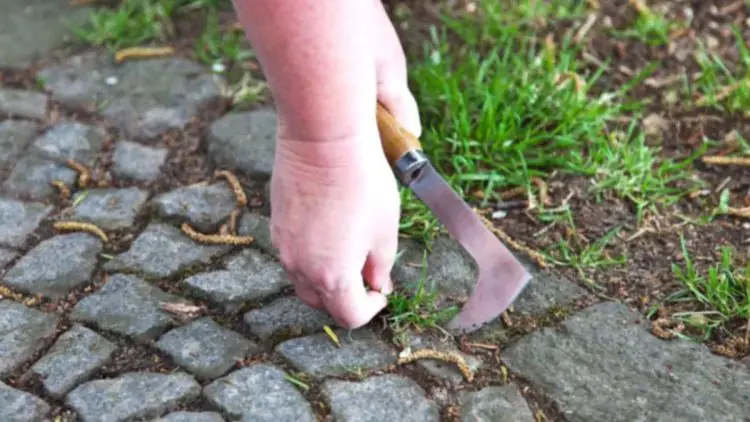
Weeds growing between paving joints, whether on terraces or pathways, can mar the appearance of your garden. While there are various methods to tackle this problem, it’s important to choose your approach wisely to avoid potential fines. Here are four effective methods to eliminate weeds from joints, along with crucial details to keep in mind.
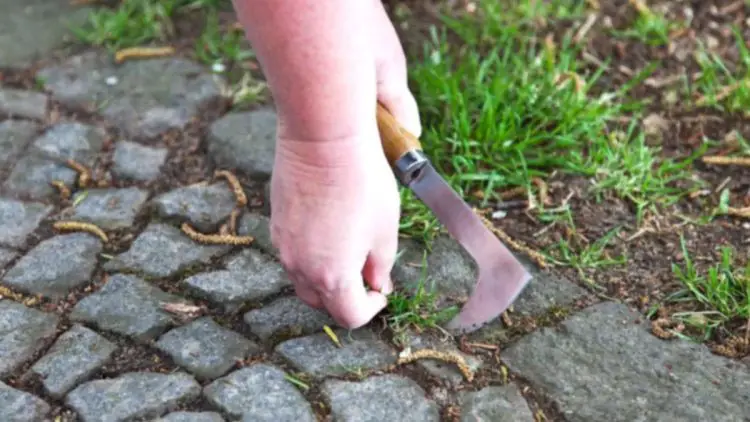
1. Joint Scraper
Using a joint scraper is a labor-intensive but environmentally friendly method to remove weeds:
- Tools Needed: A joint scraper, joint brush, and shovel are essential. For larger gaps, a weed puller can also be used.
- Technique: Extend your tools with a telescopic handle to avoid working on your knees and to protect your back. Remove weeds by hand, ensuring you pull out the roots to prevent regrowth. After rainfall, the soil becomes softer, making weeds easier to remove. A joint brush can help clear out any remaining loose weeds.
Tip: Weeds are also easier to remove during dry periods as the roots will have less grip.
2. Pressure Washer
A pressure washer uses high-pressure water to blast weeds from joints:
- Usage: Employ lukewarm water and direct the jet at a 45-degree angle to avoid damaging the joint material. This method is both efficient and environmentally friendly, requiring less effort compared to manual methods.
- Cost: Pressure washers can be expensive, but you can rent one from a hardware store if needed. Ensure you follow the correct usage tips to avoid damaging your paving.
3. Gas Burner
Using a gas burner is a straightforward method for weed removal, but it comes with risks:
- Procedure: Heat the weeds until they wilt and then collect the remains. This method can be harmful to the environment and damaging to your paving stones.
- Safety Precautions: Wear appropriate work clothing and keep all flammable materials away. It’s advisable to have a bucket of water on hand for safety.
4. Avoiding Chemical Weed Killers
Although using chemical weed killers might seem tempting, it is prohibited:
- Legal Restrictions: According to the Plant Protection Act, applying chemical weed killers on terraces, driveways, and sidewalks is illegal due to their harmful effects on groundwater and other plants.
- Risks: Violating these regulations can result in fines of up to 50,000 euros. This also applies to common home remedies like vinegar or salt. Instead, consider using hot water to combat weeds as an alternative.
Additional Tips
- Joint Sand: To prevent new weeds from appearing, apply joint sand with a broom after weed removal. This helps stabilize the joints and reduces the chances of weed regrowth.
Removing weeds from joints can be a challenging and time-consuming task, but using the right methods can make it more manageable. By avoiding prohibited practices and employing effective techniques, you can keep your garden looking pristine and weed-free.


