Liming trees involves applying lime milk to their trunks, a traditional method that protects against diseases and pests naturally. Here’s all you need to know to use this technique effectively in your garden.
Which Trees to Lime? Why?
You can lime adult fruit trees and ornamental trees or shrubs, excluding young branches and leaves. Lime acts preventatively against fungi and parasites. It also protects young fruit trees from sunburn and temperature fluctuations during winter, preventing bark damage from sudden freezes.
When to Put Lime on Trees?
The best time to apply lime is during leaf fall, typically from October to early winter. This timing ensures the lime remains effective before vegetation and pests become active in spring. Consider reapplying every three years to maintain protection without harming beneficial insects.
How to Do It?
- Prepare the Tree: Clean the trunk with water and a stiff brush to remove moss and lichens. Remove loose bark to ensure the lime adheres well.
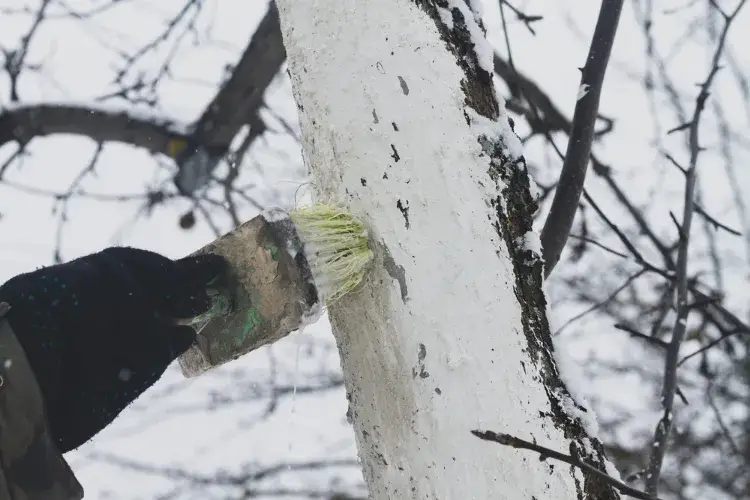
- Apply the Lime: Use a wide brush to apply lime from the first branches down to the trunk’s base. Ensure a uniform layer on the bark, especially on uneven surfaces. You may need to apply multiple coats without waiting for the previous one to dry.
Be cautious around tree wounds as lime can harm the tree if it penetrates damaged tissue. Avoid applying lime during rainy or windy weather for optimal effectiveness.
Liming is a time-tested method to safeguard trees naturally, but moderation is key to preserving biodiversity by not eliminating beneficial insects inadvertently. Follow these steps to enhance the health and longevity of your trees with this ancient protective practic