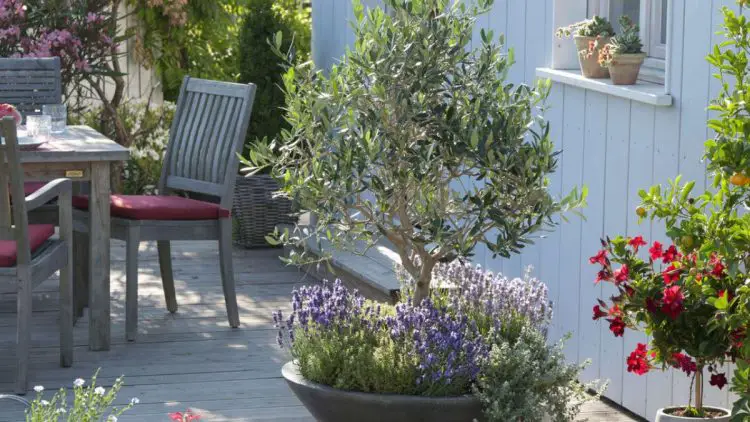
An olive tree adds a delightful Mediterranean flair to your terrace or balcony with its striking silver-grey, lanceolate leaves. However, as your olive tree grows, it may outgrow its pot, necessitating a repotting. Here’s how to do it correctly!
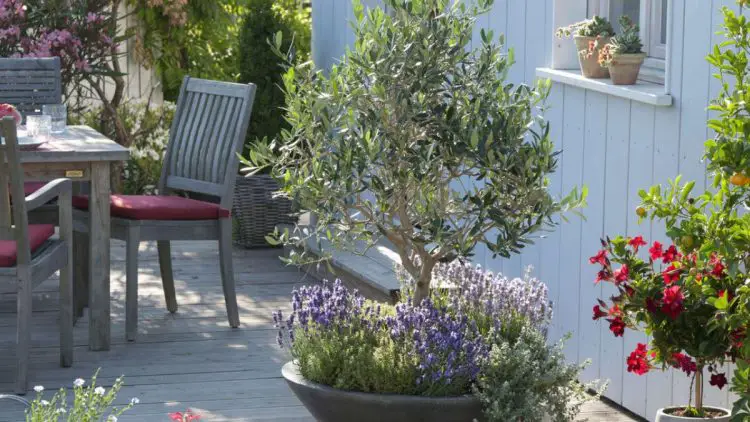
When Should You Repot an Olive Tree?
The timing for repotting depends on the growth of the olive tree. Young trees grow faster and may need repotting more frequently. Here are key signs it’s time to repot:
- Crown Diameter: If the diameter of the crown exceeds that of the pot, it’s time to repot.
- Roots in Drainage Holes: Roots emerging from the pot’s drainage hole are a clear signal for repotting.
Ideally, repot just before the new growing season, at the end of winter or early spring, when the plant can focus its energy on root formation. You can also repot before wintering, but use nutrient-free soil to prevent budding during dormancy, which can weaken the tree.
Choosing the Right Pot
Opt for a terracotta or clay pot to naturally regulate soil moisture and reduce the risk of water stagnation. If using a plastic pot, ensure it allows for adequate drainage. When repotting, choose a pot that is about 4 cm larger in diameter than the current pot. If the tree doesn’t need to grow but just requires fresh soil, you can reuse the same pot.
What Soil for the Olive Tree?
An olive tree thrives in a permeable substrate that provides good root grip. A suitable mix includes:
- Garden Soil: 1/3 of the mixture
- Compost: 1/3
- Seaweed Lime: 10%
- Fillers: Coconut or wood fibers
This well-structured substrate supports healthy roots. Alternatively, you can use citrus potting soil or potting soil for container plants, mixed with carbonate lime and expanded clay.
How to Repot an Olive Tree
- Work in Pairs: It’s easier to manage with help.
- Gently Remove the Tree: Pull the olive tree upwards to lift it from the pot. If it’s too heavy, set it down briefly.
- Detach Roots: If roots are stuck to the porous terracotta, carefully use a knife to separate them from the pot wall, minimizing damage.
- Loosen the Root Ball: Tap the substrate from the root ball and loosen the roots. Cut away any rotten or atrophied roots.
- Shorten Fine Roots: If the tree won’t continue growing, trim the fine roots and prepare to replant in the same pot with fresh soil.
- Prepare the Pot: Cover the bottom with a pottery shard, then add a drainage layer of expanded clay, gravel, or chippings (no more than 5 cm thick).
- Layering: Place permeable non-woven fabric on the drainage layer, then add a layer of soil.
- Position the Tree: Center the olive tree and fill in with substrate, packing down the soil gently as you go.
- Water the Plant: Finally, give the newly repotted tree a good watering.
Olive trees are cherished container plants that enhance any outdoor space. For healthy growth and a bushy crown, remember to prune your olive tree regularly!


