Garlic has long been cherished for its medicinal qualities and ability to enrich the flavors of various dishes. Growing garlic is relatively low-maintenance, with two main types: winter garlic, planted in autumn, and spring garlic, planted in the spring.
Choosing the Right Time: The ideal time to plant spring garlic is in early to mid-April, when the soil temperature reaches about +5-7°C. This temperature range promotes root formation and leaf growth, crucial for developing healthy bulbs. Delaying planting can hinder bulb development as higher temperatures halt plant growth.
Varieties Selection: Select garlic varieties adapted to your local climate. Varieties are categorized into early, mid-season, and late-season types. Popular varieties include:
- Gulliver: A productive mid-late variety with large heads weighing 95-250 grams.
- Olenivskyi: Known for its cold resistance and long storage life, producing dense heads up to 35 grams.
- Sochinskyi 56: An early-ripening variety resistant to diseases, with heads up to 45 grams.
- Victorio: A medium-ripening variety with heads around 40 grams, suitable for long-term storage.
- Abrek: Medium-ripening with a sharp taste, heads approximately 25 grams, storing well for about 7 months.
- Yershovskyi: Disease-resistant with heads up to 35 grams, also storing for about 7 months.
- Cledor: An elite French variety, medium-ripening, highly disease-resistant, with large heads.
- Flavor: A medium-ripe French variety known for its large heads and pleasant taste.
- Ukrainian White: High-yielding, adaptable to both winter and summer planting, heads weighing 80-140 grams.
Preparing the Planting Site: Choose a sunny location with well-draining sandy or loamy soil. Avoid low-lying areas prone to water accumulation. Prepare the soil in autumn by digging it to shovel depth, incorporating half a bucket of humus or compost, three glasses of wood ash, and 10-15 grams of complex mineral fertilizer per square meter. Level the soil surface in spring before planting and consider disinfecting with a weak hydrochloric acid solution.
Crop Rotation and Neighboring Plants: Rotate garlic after crops like cucumbers, cabbage, legumes, or herbs. Avoid planting after carrots, potatoes, onions, or garlic itself to prevent yield decline. Garlic can benefit from proximity to gladiolus, roses, onions, strawberries, tomatoes, potatoes, cucumbers, and berries but should be spaced away from cabbage, peas, and beans.
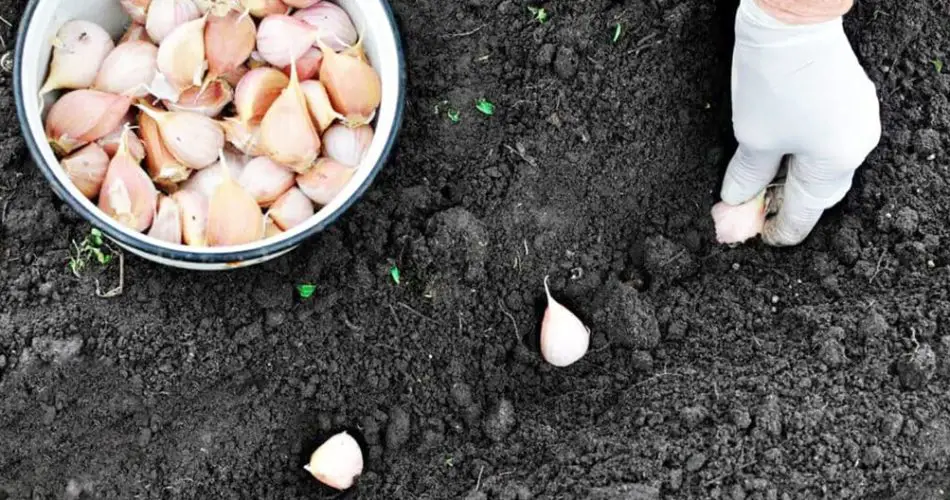
Planting Process: Select large or medium cloves for planting, leaving them intact and unpeeled until planting. Treat cloves with a solution of potassium permanganate or copper sulfate 12 hours before planting to prevent diseases. Optionally, enhance germination by pre-soaking in warm water or refrigerating them briefly. Plant cloves in moist soil, spacing them 8-12 cm apart. Water thoroughly after planting and avoid covering with additional film as garlic is frost-resistant.
By following these steps, you can ensure successful planting of spring garlic, setting the stage for a robust harvest of flavorful bulbs in your garden.